


Objective
This guide explains where wasps commonly build nests around Colchester properties, how to spot early signs and what you can do to reduce the chance of a nest becoming a bigger problem.
Key Takeaways
- Wasps commonly nest in roof spaces, wall cavities, sheds, garages, eaves and gardens.
- Repeated wasp activity around one opening can indicate an active nest.
- Sealing suitable gaps, managing waste and checking likely nesting areas can help prevent problems.
- Never disturb an active nest, especially near children or busy areas.
- Professional help can be sensible when a nest is inside a wall, roof or other difficult location.
Introduction
A few wasps around your garden may not seem like a big issue. But if you keep seeing them enter the same gap under your roof, wall or shed, there could be a nest nearby.
Wasp control in Colchester starts with knowing where wasps are likely to build nests and what makes your property attractive to them. The good news is that you can reduce many of these risks with simple checks and regular property care.
Table of Contents
- Where Do Wasps Build Nests?
- Why Do Wasps Choose These Areas?
- Signs You May Have a Wasp Nest
- How to Prevent Wasp Nests
- What to Do If You Find a Nest
- When to Call a Professional
- FAQs
Where Do Wasps Build Nests Around Colchester Properties?
Wasps look for sheltered places where they can establish and protect a colony. Around homes and businesses, that often means areas you rarely inspect.
Roof Spaces and Eaves
Lofts, roof cavities, eaves and gaps around roof structures can provide shelter from weather and disturbance. BPCA advises checking lofts, garages, sheds and areas under eaves during spring.
Wall Cavities and Air Bricks
A wall cavity can hide a nest from view. You may notice wasps repeatedly entering one small opening without ever seeing the nest itself.
Air bricks and other openings can also provide access.
Sheds, Garages and Outbuildings
These areas often stay quiet for long periods. A shed roof, garage wall or garden building can therefore provide a suitable nesting location.
Gardens and Ground-Level Areas
Wasps can also nest in trees, hedges, compost areas, long grass and underground spaces.
This matters if you have children playing outside or regularly use your garden.
Why Do Wasps Choose These Areas?
Here’s the thing: wasps do not need a large opening to get inside.
Recent BPCA guidance notes that queens can use gaps as small as 3 mm when looking for nesting sites. The same guidance recommends building proofing, clean bins and good garden management as part of wasp prevention.
Food also matters. Open bins, food waste, spilt drinks and ripe fruit can attract wasps to areas around your property.
A simple example is a garden where the bin sits beside the back door with its lid slightly open. Even if there is no nest nearby, the food source can bring more wasps into an area used by your family.
How Can You Tell If You Have a Wasp Nest?
One wasp does not automatically mean you have a nest. Repeated activity is more useful.
Look for:
- Wasps entering and leaving the same hole
- Several wasps around one roof or wall area
- Buzzing from a wall or ceiling
- Wasps regularly appearing inside your property
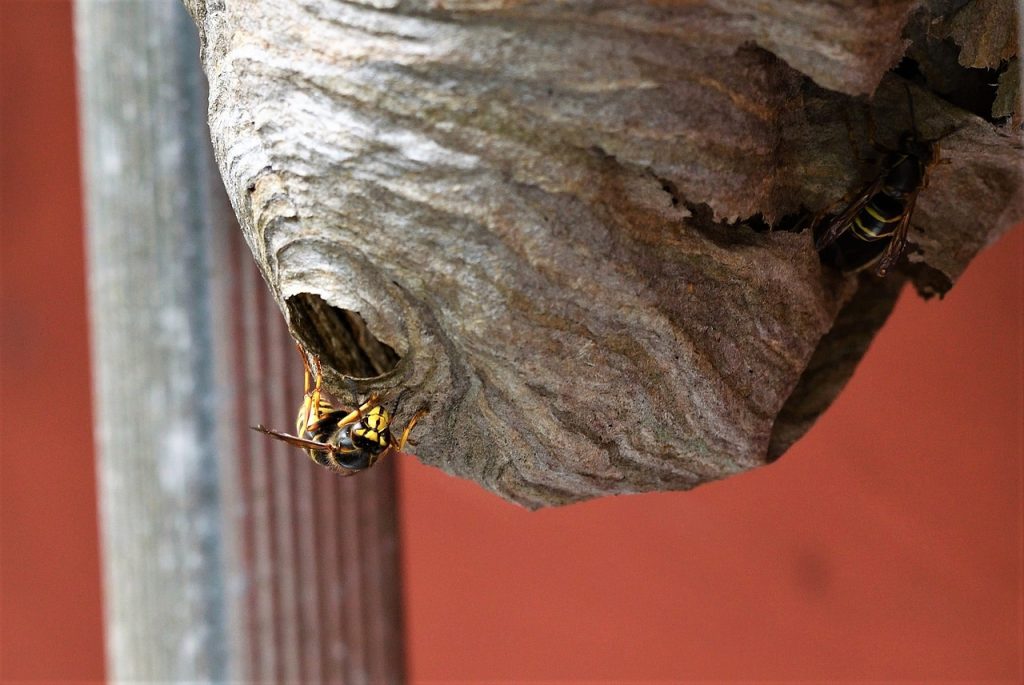
- A visible grey or beige, paper-like nest
An active nest often has a clear flow of wasps entering and leaving through the same point.
North Essex Pest Control also reports dealing with nests in areas such as wall cavities, sheds and garages around Colchester and North Essex.
How to Prevent Wasps Building Nests
You cannot make your property completely unattractive to wasps, but you can remove many easy nesting opportunities.
1. Check and Seal Gaps
Inspect:
- Eaves and soffits
- Roof edges
- Air bricks
- Wall openings
- Window frames
- Gaps around external structures
Repair suitable gaps where safe to do so. Do not seal an opening while an active nest may still be inside.
2. Keep Bins Clean and Closed
Use bins with secure lids and clean food residue from containers before recycling them. BPCA specifically recommends keeping bins closed and rinsing recyclables to reduce available food sources.
3. Keep Your Garden Tidy
Remove unnecessary garden rubbish, manage overgrown areas and keep sheds reasonably clear. Check likely nesting areas during spring before wasp activity increases.
4. Check Early
Early inspection gives you a better chance of spotting activity before a nest becomes established. BPCA recommends checking likely locations in spring when nests are still small.
What Should You Do If You Find a Nest?
Do not knock it down or block its entrance.
An active nest can contain many wasps, and disturbing it can cause defensive behaviour. This is especially important if the nest sits near a child’s play area, entrance, workplace or another busy part of the property.
If you see repeated activity but cannot locate the nest, keep people away from the area and seek professional advice.
For a concealed or difficult-to-reach nest, Wasp nest removal Colchester can provide a safer route than attempting to reach the nest yourself.
When Should You Call a Professional?
Professional Wasp control in Colchester is worth considering when the nest is:
- Inside a wall or roof space
- Near children or vulnerable people
- Close to a main entrance
- In a difficult-to-reach position
- Causing repeated wasp activity inside your property
North Essex Pest Control provides wasp control for residential and commercial properties in Colchester and surrounding North Essex areas. Its website also highlights professional treatment and prevention advice.
A 5-Minute Wasp Prevention Check
Walk around your property and check these five areas:
| Area | What to check |
| Roof | Gaps around eaves and roof edges |
| Walls | Openings and air bricks |
| Garden | Sheds, hedges and garden waste |
| Bins | Loose lids or food residue |
| Loft | Repeated wasp activity or buzzing |
If you spot wasps repeatedly using one opening, do not block it straight away. That opening may be the route to a hidden nest.
Final Thoughts: Stop the Problem Before It Grows
Good Essex wasp control starts before a nest becomes a major nuisance. Regular spring checks, secure bins, sensible garden maintenance and basic property proofing can all reduce the opportunities wasps have to settle around your home or business.
If you have already found an active nest, especially inside a wall, loft or roof space, avoid disturbing it. Contact North Essex Pest Control for professional advice and help with wasp problems around Colchester and North Essex.
FAQs
Where do wasps usually build nests around houses?
Wasps commonly use lofts, roof spaces, wall cavities, eaves, sheds, garages, trees, hedges and underground areas.
How can I stop wasps building a nest?
Seal suitable gaps, keep bins closed, rinse food containers, maintain your garden and check likely nesting areas during spring.
Should I block a hole where wasps are entering?
No. If an active nest is inside a cavity, blocking the entrance may cause wasps to look for another route into the property.
Are wasp nests reused every year?
No. Social wasps generally do not reuse an old nest. A new queen may select the same type of sheltered location.