


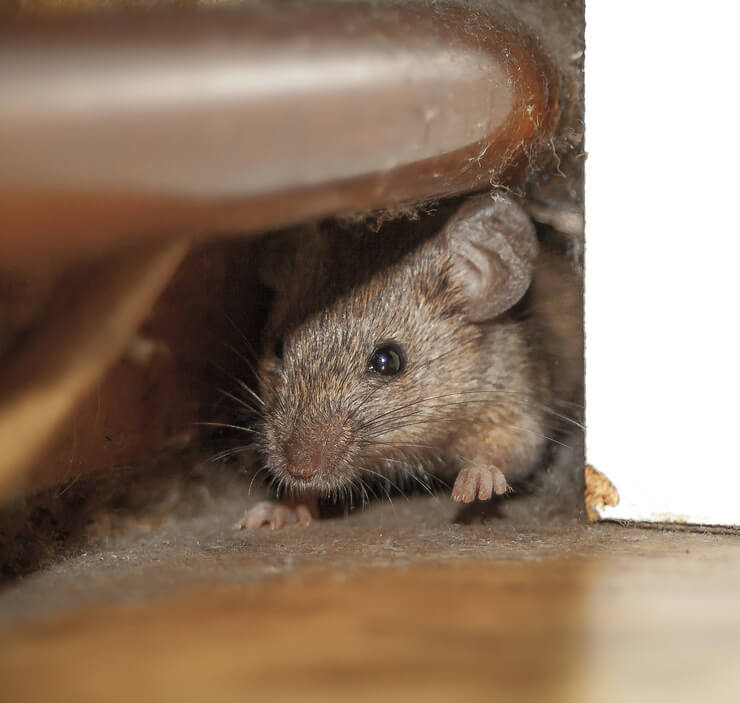
Objective
This guide is here to help you understand why DIY rat control often fails and what actually works if you want to remove rats from your property for good.
Key Takeaways
- Rats are far smarter than most people expect; they avoid traps after first contact.
- DIY methods treat visible activity, not the actual nest
- Sealing entry points too early can make the problem significantly worse.
- Rats can spread serious illnesses, including leptospirosis (Weil’s disease), and can cause fire risks through gnawing on electrical cables.
- Professional treatment focuses on full removal, proofing, and long-term prevention.
Introduction
You heard it last night. That scratching. Coming from above the ceiling or behind the skirting board. You told yourself it was probably nothing. But then the droppings appeared. And the smell.
Here’s the thing: you are not the only one. Rat problems are one of the most common pest issues reported across Colchester every single year. And almost every homeowner does the same thing first. They grab a trap from the hardware store, maybe some poison from the garden centre, and hope for the best.
Most of the time, it does not work. Not because you did something wrong. But DIY rat control is designed to deal with what you can see, not what is actually driving the problem.
This guide will explain exactly why that happens, what the risks are, and what professional rat pest control in Colchester actually looks like when done properly.
Table of Contents
- How to Know If You Actually Have Rats
- Why DIY Rat Control Keeps Letting You Down
- The Hidden Risks Most People Do Not See Coming
- What Professional Rat Control Does Differently
- A Real Example From a Colchester Home
- How to Stop Rats Coming Back
- When to Call a Professional
- Conclusion
- Frequently Asked Questions
How to Know If You Actually Have Rats
Before anything else, let’s make sure we are dealing with rats and not mice or something else entirely.
The signs are usually pretty clear once you know what to look for:
- Scratching or running sounds behind walls or in the loft, almost always at night
- Dark, banana-shaped droppings around 10–20mm long near food sources or skirting boards
- A strong ammonia-like smell that lingers, especially in closed spaces like cupboards or loft spaces
- Gnaw damage on wooden beams, plastic pipes, electrical wiring, or food packaging
- Grease marks along walls and skirting boards where rats travel the same route repeatedly
Rats only need a gap of 15mm to enter a property, roughly the width of a pencil. So even if your home looks tightly sealed, they are often getting in through gaps you would never think to check.
If two or more of these signs are present, you are almost certainly dealing with an active infestation, not a one-off visitor.
Why DIY Rat Control Keeps Letting You Down
Let’s break it down properly, because this is where most people get stuck.
Rats learn to avoid traps – fast.
Rats are naturally cautious around anything new in their environment. If a trap fails to trigger on the first contact, that rat will avoid it going forward. Some rats and mice have learnt to avoid commonly used traps and bait boxes altogether. Within a colony, this learned behaviour spreads quickly.
You are targeting activity, not the source.
What you see, droppings in the kitchen, scratching in the loft, is just the end result. The nest itself is usually hidden deep inside loft insulation, wall cavities, or under floorboards. DIY methods target where rats appear. They do almost nothing to the place where rats actually live and breed.
Shop-bought poison is not what professionals use.
Rat and mouse baits used by professional technicians are restricted for professional use only and are not available to the general public. Unfortunately, not all of the off-the-shelf poisons available for amateur use are particularly effective, and it is difficult for consumers to select the most suitable product.
Blocking holes at the wrong time causes serious damage
This is the mistake we see most often. If you seal entry points while an active infestation is still inside, rats do not disappear; they go deeper. They will chew through whatever is in the way to find a new exit, sometimes breaking into living areas they had not reached before. Proofing must only happen after treatment is complete.
Here is a quick comparison to make this clear:
DIY MethodWhy It Fails
Snap traps Rats avoid after first non-lethal contact
Over-the-counter poison Less effective formulations; incorrect placement
Blocking entry points early Forces rats deeper into the property
Ultrasonic repellents Very little evidence that these have anything more than a short-term effect
Single one-off treatment Colony rebuilds from surviving individuals
The Hidden Risks Most People Do Not See Coming
What this really means is that DIY is not just ineffective; it can actively make things worse.
Risk to children and pets
Poison placed incorrectly in open areas puts children, dogs, and cats at serious risk. Rodenticides have to be used safely and in accordance with instructions to prevent harm to people, particularly children, domestic animals, and non-target wildlife.
If you locate a nest and disturb it without a proper treatment plan, rats scatter into new areas of the property. What was one problem becomes several.
The longer you wait, the more it costs
Rats breed rapidly. A small, manageable infestation can grow significantly within weeks if not controlled properly. Gnawing on electrical cables creates a serious fire risk that compounds the longer rats are active inside your walls.
What Professional Rat Pest Control Does Differently
Professional treatment is not just a stronger version of what you can buy in a shop. The approach is completely different from the start.
Full property survey first
A qualified technician will inspect loft spaces, sub-floor voids, the external perimeter, drainage access points, and garden structures, not just the areas where you have seen activity. The goal is to find the nest, map every entry point, and understand the full scale of the problem before any treatment begins.
Approved products placed correctly
Professionals use rodenticides that are not available to the public, placed in tamper-resistant bait stations along confirmed rat runs, not in open areas. Rodenticides can harm other wildlife if not used correctly, which is why their use is regulated and requires proper training under UK guidelines.
Follow-up visits are essential.
A single visit rarely resolves an active infestation. Follow-up visits allow the technician to check bait take, adjust placement if needed, and confirm the colony has been eliminated before any proofing work begins.
Proofing and prevention at the right stage
Only once the infestation is confirmed clear does the real sealing work begin, using steel mesh, concrete filler, and appropriate materials to close every entry point found during the survey.
At North Essex Pest Control, our process follows exactly this structure: survey first, treatment second, proofing third. No shortcuts.
A Real Example From a Colchester Home
A homeowner in the CO2 area contacted us after three weeks of trying snap traps in their loft. Nothing had been caught. But the scratching was getting louder, and droppings had started appearing in a bedroom cupboard.
When our technician carried out the survey:
- The main nest was found deep in loft insulation, well away from where the traps had been placed
- Three separate entry points were identified: under a roofline, around a soil pipe, and through a gap in the soffit
- Bait stations were placed along confirmed rat runs, not in open areas
By the second visit ten days later, bait take confirmed the colony was responding. The third visit confirmed no new activity. Proofing was completed at that point.
Total time from first call to resolution: 28 days.
This is a very common scenario. The traps were not the problem. The placement was.
How to Stop Rats Coming Back
Treatment solves the current problem. What you do after determines whether they return.
Inside the home:
- Store all dry food in hard-sided, sealed containers
- Keep bin lids closed at all times
- Clear up pet food immediately – never leave it out overnight
Entry points:
- Seal gaps around pipes, cables, and vents – even small cracks and holes in skirting boards or walls can be entry points
- Replace damaged air bricks with rodent-proof mesh versions
Garden and external areas:
- Protect compost heaps with wire mesh to prevent rats from digging in Colchester City Council
- Keep garden waste cleared and dense ground cover cut back near the building
- Store wood piles off the ground and away from the house
- If you feed garden birds, use a feeder basket to catch dropped seed, and bring bird food in at dusk.
When to Call a Professional Rat Exterminator in Essex
Sometimes the right call is simply not to wait. Contact a professional if:
- DIY methods have not reduced activity after two weeks
- You are hearing constant noise, not occasional, in the walls or ceilings
- Droppings are appearing in food storage or living areas
- You can smell a persistent ammonia-like odour
- You are a landlord; the Housing Act places legal responsibility on property owners to address infestations
- If you run a food business, café, or restaurant, an infestation on commercial premises can trigger enforcement action, closure notices, and lasting damage to your reputation.
Stop Guessing – Start Solving It Properly
Here is the honest truth. Rats are not a nuisance that sorts itself out. They breed fast, adapt fast, and hide well. DIY methods feel like progress in the moment but rarely address what is actually causing the problem.
Rat control in Colchester works when it treats the whole issue, the colony, the entry points, and the environmental factors that made your property attractive in the first place.
The earlier you act, the simpler and cheaper the solution. And the longer you wait, the more ground you give them.
North Essex Pest Control provides rapid, discreet rat treatment across Colchester and the surrounding Essex area, with full surveys, approved treatments, and the follow-up visits needed to resolve infestations properly.
→ Contact us today and get your home back under control.
Frequently Asked Questions
1. Why do rats keep coming back after I treat them myself?
Because the nest and entry points are still intact, removing individual rats without addressing where they live and how they are getting in means the colony rebuilds, and new rats continue to enter from outside.
2. Is the rat poison I can buy in shops the same as what professionals use?
No. Pest control professionals have access to stronger, second-generation rodenticides not available to the public. They are also trained in safe placement and regulated in their use, which makes a significant difference to results.
3. How quickly do rats multiply in the UK?
Very quickly. Mild winters and increased food waste mean rat populations have been rising steadily across the Colchester area, and a small infestation can grow substantially within a few months if left untreated.
4. Can I fully remove rats by myself?
For a very early, small problem, occasionally, yes. But for any established infestation with evidence of a nest, professional treatment is substantially more reliable and almost always faster than repeated DIY attempts.
5. When should I call rat control in Colchester?
As soon as you notice repeated signs, droppings, scratching, gnaw damage, or smell. The sooner you act, the fewer visits are needed and the lower the overall cost.